How to Choose Your HDB BTO Unit: 4 Critical Factors (2026)
Got a BTO queue number? How flat selection works in 2026, what to check on site, and how sun, height, noise and access affect daily life and resale value.
How we made this. Updated for 2026 with AI-assisted research. Figures are linked to their sources — check them before you act.
When your BTO queue number comes up, you choose from whatever units are left, often in a single short appointment. The buyers who choose well decide before they arrive. They walk the site, rank units on four factors (sun and wind, height and view, noise and privacy, and access), and think about who might buy the flat from them in 5 or 10 years.
At a glance
- Flat booking starts about four weeks after ballot results. HDB tells you about two weeks before your appointment.
- The option fee is S$2,000 for 4-room and bigger flats, S$1,000 for 3-room, and S$500 for 2-room Flexi. You sign the Agreement for Lease within about 9 months of booking.
- You can watchlist units on the HDB Flat Portal. Shortlist 10 to 20, because buyers ahead of you will take some.
- Your unit choice locks you in for the minimum occupation period: 5 years for Standard flats, 10 for Plus and Prime.
How flat selection works in 2026
HDB plans to launch about 19,600 BTO flats in 2026, including more than 4,000 Shorter Waiting Time flats. The next exercise, in November 2026, offers about 7,960 flats in Bedok, Geylang, Sembawang, Tengah, Toa Payoh and Yishun.
The steps, from the gov.sg BTO guide (updated 29 Jun 2026), are:
- Apply during the one-week window. The fee is S$10, and the order of application does not matter.
- Get your ballot result within about two months. Your queue number shows your place in line.
- Book a unit at your appointment and pay the option fee.
- Sign the Agreement for Lease within about nine months and pay the first downpayment. This is 10% with an HDB loan, or 20% with a bank loan, of which at least 5% must be cash. Our HDB loan guide explains the difference.
Since October 2024, every BTO project is classified as Standard, Plus or Prime. The 2016 version of this article spoke of “mature” and “non-mature” estates. That framing no longer sets the rules. The classification now decides your MOP, whether you can ever rent out the whole flat, and whether HDB takes back part of the price when you sell.
Before your appointment: walk the ground
The most useful advice in the original article still holds: visit the site at least twice.
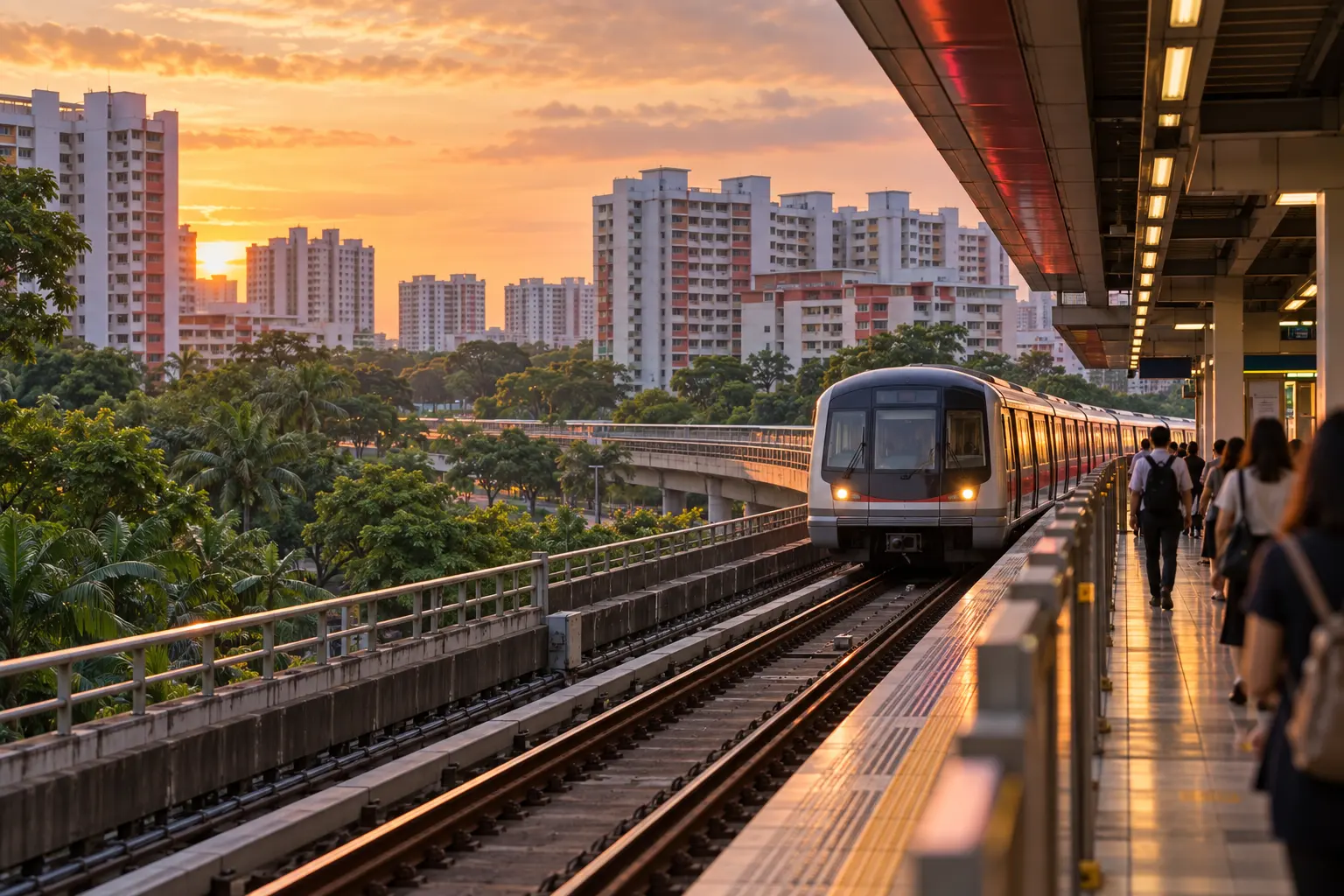
- On a weekday morning, see the peak-hour traffic, school drop-offs and how long the walk to the MRT or bus stop really takes.
- On a weekend afternoon, check where the afternoon sun falls and how busy the area gets.
A BTO site is often bare land or a construction site, so walk the surrounding streets instead. Then check what will be built next to you:
- The HDB site plan and brochure for your project show block positions, carparks, the precinct pavilion, playgrounds and bin centres.
- URA’s Master Plan 2025 map on URA SPACE shows what the empty plot next door is zoned for, such as a school, park, road or more housing.
- A satellite map shows expressways, rail viaducts and industrial areas that the brochure may not show clearly.
Rank your units at home, put them on the Flat Portal watchlist, and decide your fallback order before the appointment.
Factor 1: sun and ventilation
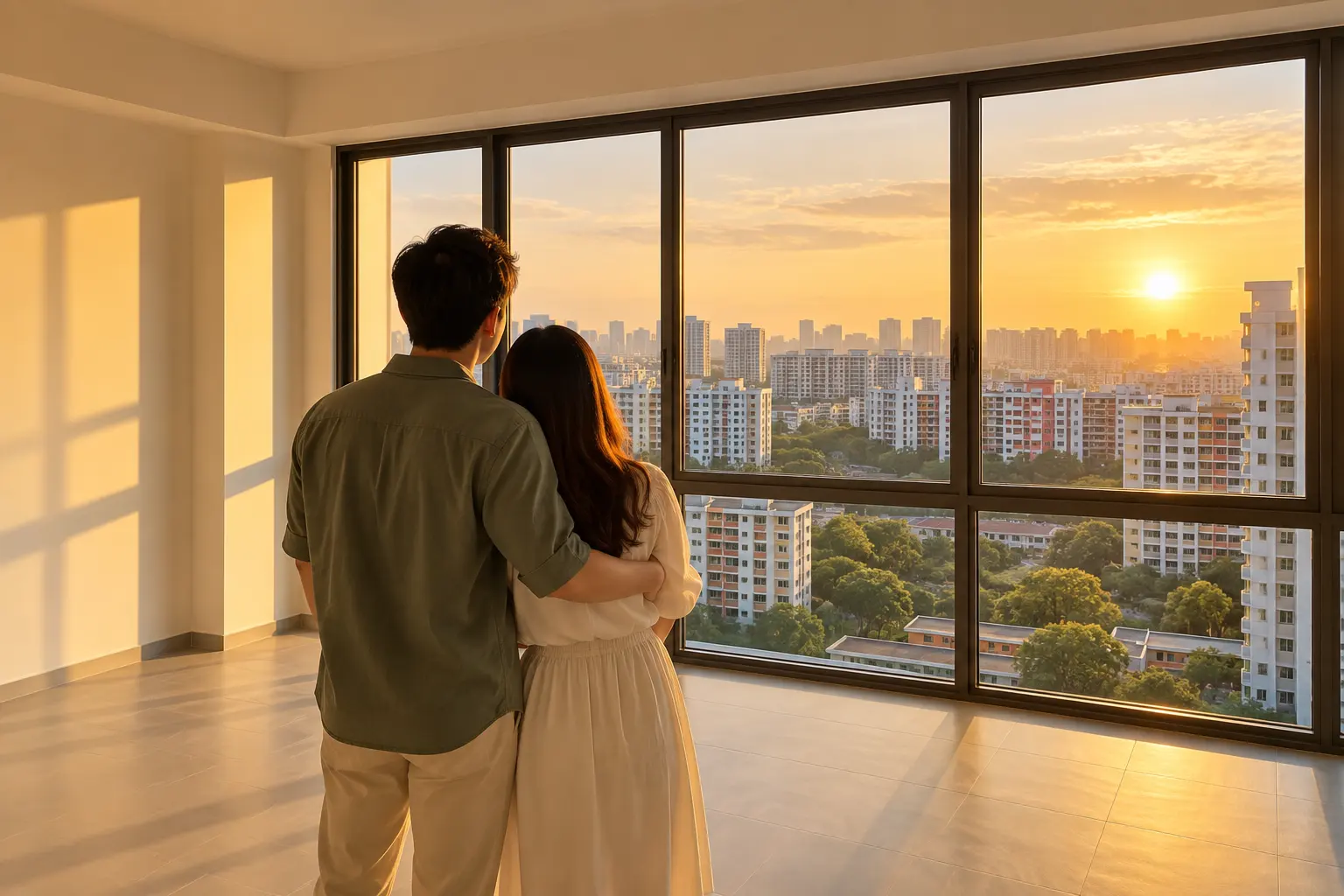
Afternoon sun heats a west-facing flat for hours. Units facing north or south generally avoid direct sun into the living areas. East-facing units get morning sun, which most people mind less. Check your unit’s orientation on the site plan, not just the block’s.
Wind matters as much. A unit with windows on two sides, or a corridor open to the breeze, stays cooler without air-conditioning. If a tall block or multi-storey carpark sits right in front of a stack, it will block both light and wind.
Factor 2: height and view
Higher floors usually cost more. In return you get more light and breeze, and less dust and noise from the ground. Lower floors cost less, are easier with young children or elderly parents, and do not depend on lifts.
Be careful about paying extra for a view. An “unblocked” view across an empty plot lasts only until the plot is built on. Check the Master Plan before you pay for it. Views over a park, a reservoir or a low-rise conserved area are more likely to last.
Factor 3: noise and privacy
List what makes noise near each stack:
- Main roads and expressways. Lower floors facing them hear the most traffic.
- MRT viaducts, schools, playgrounds and roof gardens.
- The precinct pavilion, where weddings, funerals and community events are held.
- Multi-storey carparks. Car headlights on the ramps can shine into bedrooms at night.
- Bin centres and refuse chutes, which bring smell and collection trucks early in the morning.
For privacy, look at how close the next block is, and whether your windows face a neighbour’s windows or the common corridor. Units near the lift lobby are convenient but have more people walking past.
Factor 4: accessibility
A small difference in walking time adds up. If one stack is 10 minutes further from the MRT than another, a walk there and back on every working day adds up to about 80 extra hours a year. Ask yourself:
- Which stacks are nearest the MRT, bus stops and sheltered linkways?
- Where is the carpark entrance, if you drive?
- How far is it to schools, markets and the nearest clinic?
Drivers and public-transport users will often prefer different blocks in the same project. Choose for how you actually live.
Choose with the exit in mind
You may live in the flat for decades, but you may also sell it, and the next buyer will judge it on the same four factors. High floors, good ventilation, lasting views and short walks to transport tend to be easier to sell.
The classification also changes who can buy your flat:
| Standard | Plus | Prime | |
|---|---|---|---|
| MOP | 5 years | 10 years | 10 years |
| Rent out the whole flat | After MOP, with approval | Never | Never |
| Subsidy recovery on sale | None | Yes (6–8% so far) | Yes (9–14% so far) |
| Resale buyers | Wide pool, incl. PR households | Must meet BTO rules, S$16,000 income ceiling | Must meet BTO rules, S$16,000 income ceiling |
Sources: gov.sg classification guide, HDB eligibility for couples and families. Subsidy recovery rates are set for each project at launch. For example, the February 2026 exercise set Plus at 6% and Prime at 12%.
A Plus or Prime flat has a smaller pool of resale buyers, so the unit itself matters even more. For more on timing and trade-offs, read when is the best time to buy a new BTO flat and one young heartlander’s BTO experience.
Bottom line
You may have only a short appointment to pick a home for at least five years, so do the work first. Visit the site twice, check the Master Plan for what will be built next door, and rank units on sun, height, noise and access. Then ask how the flat will look to a buyer in 5 or 10 years, and for Plus and Prime flats, remember that fewer buyers will qualify. No unit is perfect. Decide in advance which compromises you can accept.
Sources
- How to buy an HDB BTO flat — gov.sg (MyNiceHome), updated 29 June 2026
- HDB flat types and classification — gov.sg (MyNiceHome), updated 24 August 2026
- Eligibility for couples and families — HDB, checked October 2026
- HDB to launch 19,600 BTO flats in 2026 — HDB, 8 January 2026
- Flash estimate of 3rd quarter 2026 Resale Price Index and upcoming flat supply — HDB, 30 September 2026
- HDB launches 9,012 flats in February 2026 BTO and SBF exercises — HDB, February 2026
- Master Plan — URA, updated 17 June 2026
1 reader comment
Fred
Yes, walking the ground is very important. There are more to what you have written.
1. Wind directions at different times of the year. Generally north to south towards end of year and south to north during the SE monsoon period. April to July
2. Afternoon sun. It plays an important aspect when you sell after MOP. It has some bearing on the price. Different times of year, the afternoon sun shines in different angles.